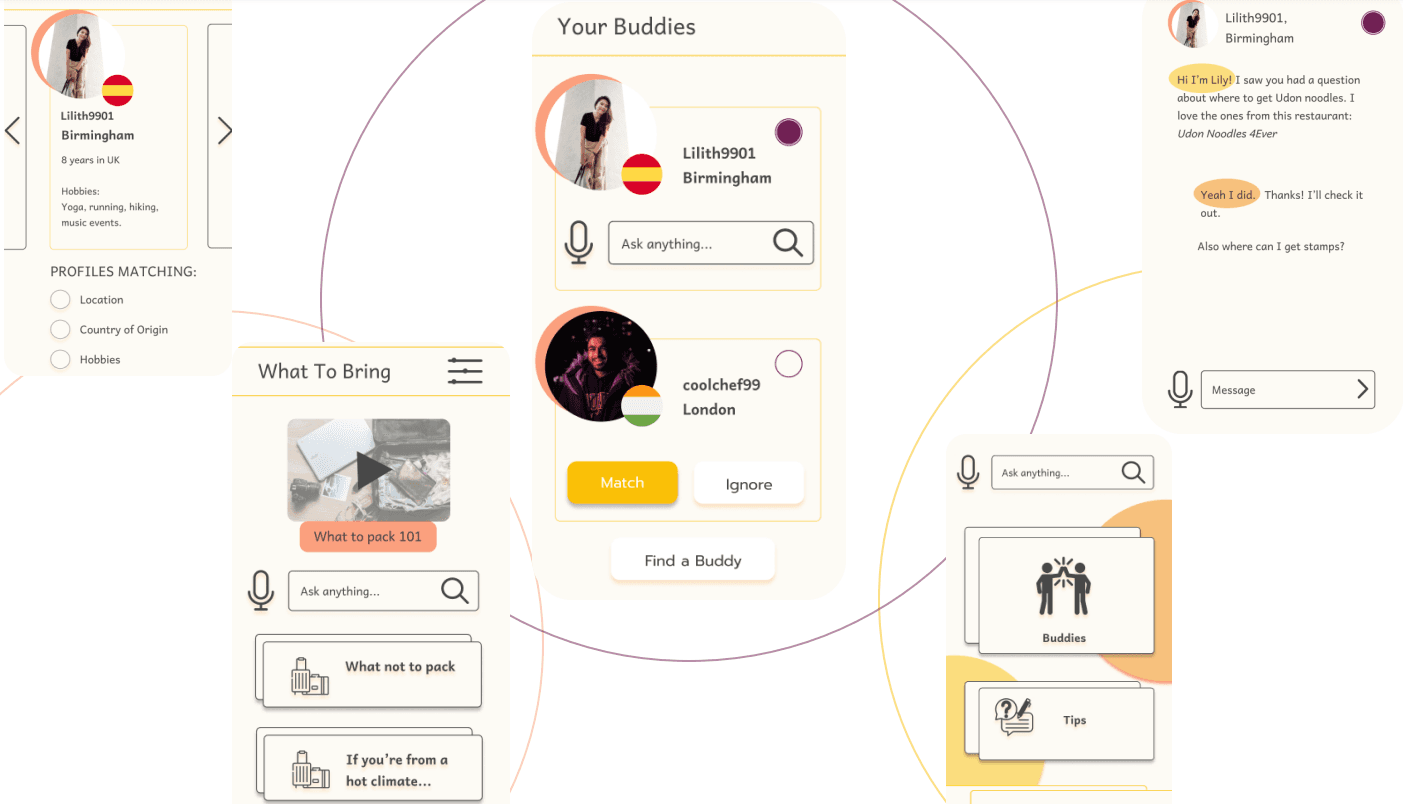
Give UK immigrants access to insider knowledge in order to understand their new environment.
Empower them with the tools and knowledge they need to feel confident and happy in their new home.
An app was developed that
Gives them tips for what they'll need to know prior to moving to the UK
Pairs them with locals who can help answer their questions and offer support.
The Stanford Method for Design Thinking was used for this project.
Every stage of the process iterated on and fed back into the previous and future stages.
Participants were included in every stage of the design process, from initial ideas through to editing mid-fidelity versions of the prototype. This was to ensure the users drove the creation of the solutions developed.
Empathise
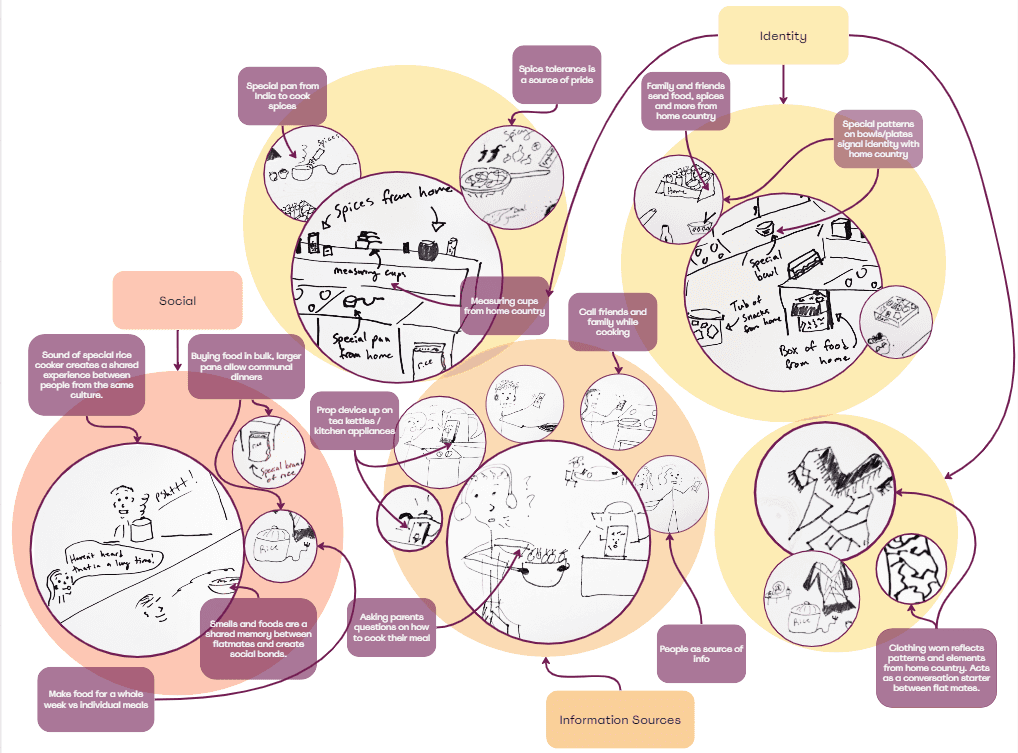
*Observational Study: the researcher went to locations international visitors and students frequented and sketched the objects, clothing, and setting to understand the context the app would be used in.
Key takeaway: make the app easy to use with one hand, for voice input, and in wide variety of of contexts and settings. It would need to be flexible for loud busy places (transport), cooking at home, and in public environments.
In the empathise phase the researcher sought to understand potential app users and the key issues and challenges they faced.
Initial assumptions
Previous to my research I had assumed that participants would describe their journey to the UK in terms of the difficulties and challenges they faced. I assumed that participants would describe themselves as being helpless, and needing assistance when coming to the UK. What I found through the discovery and research phase surprised me.
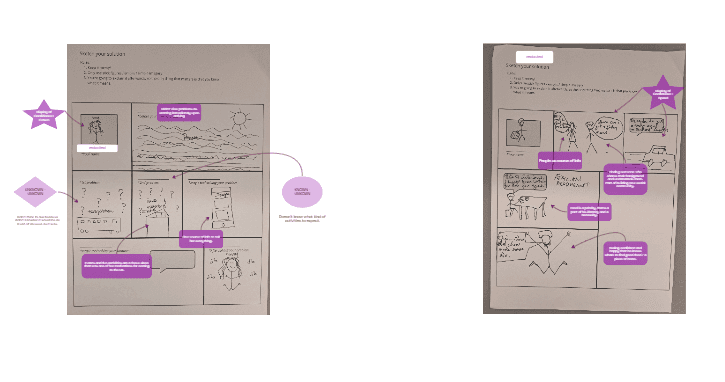
Interviews w/ Comic Strip Sketching
Interviews were conducted and participants were asked to do a short sketch of a comic showing their journey moving to the UK and the challenges they faced.
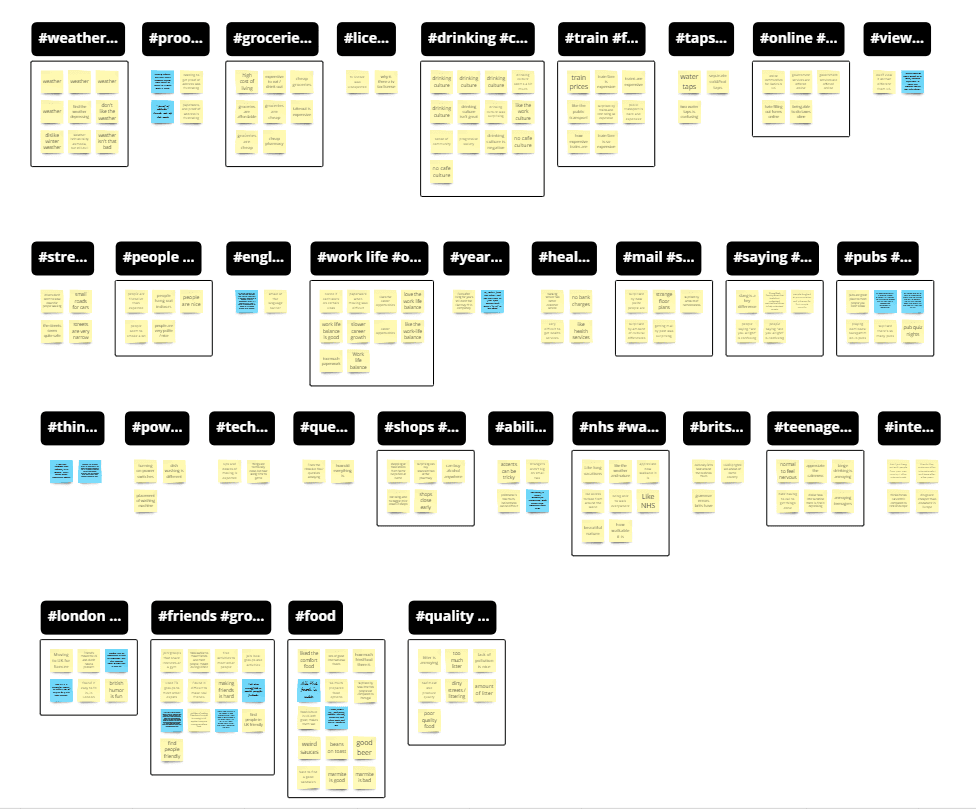
Social Media Comment Analysis
Popular reddit threads were analysed and themes extracted to understand what challenges were common across multiple individuals, versus unique to the individuals interviewed.
Insights from Research
#1 Participants felt overwhelmed by information.
#2 That said, they viewed they viewed themselves as competent not beset by challenges and always framed their story in a way that showed how they were able to succeed in their new life.
Takeaway: Make sure my app reflected that spirit of confidence and competence. The app should not put the user in a defeatist, or victim mentality, but seek to build up the confidence they already had.
Define
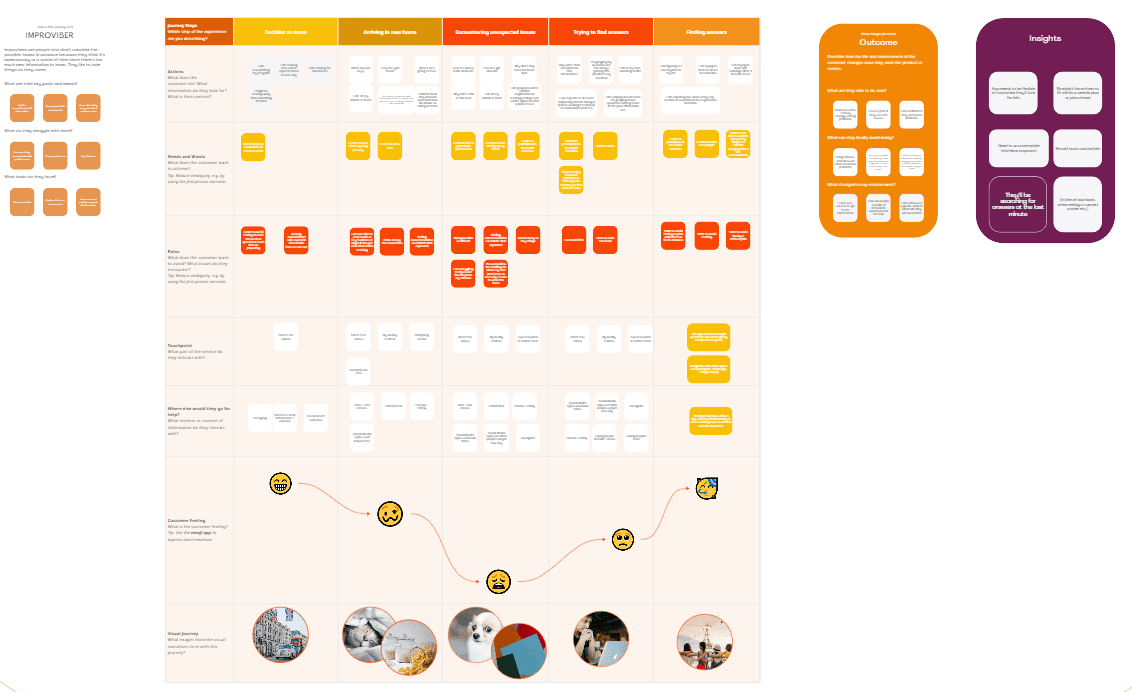
*Customer Journey Map for the second target group identified, The Improvisers.
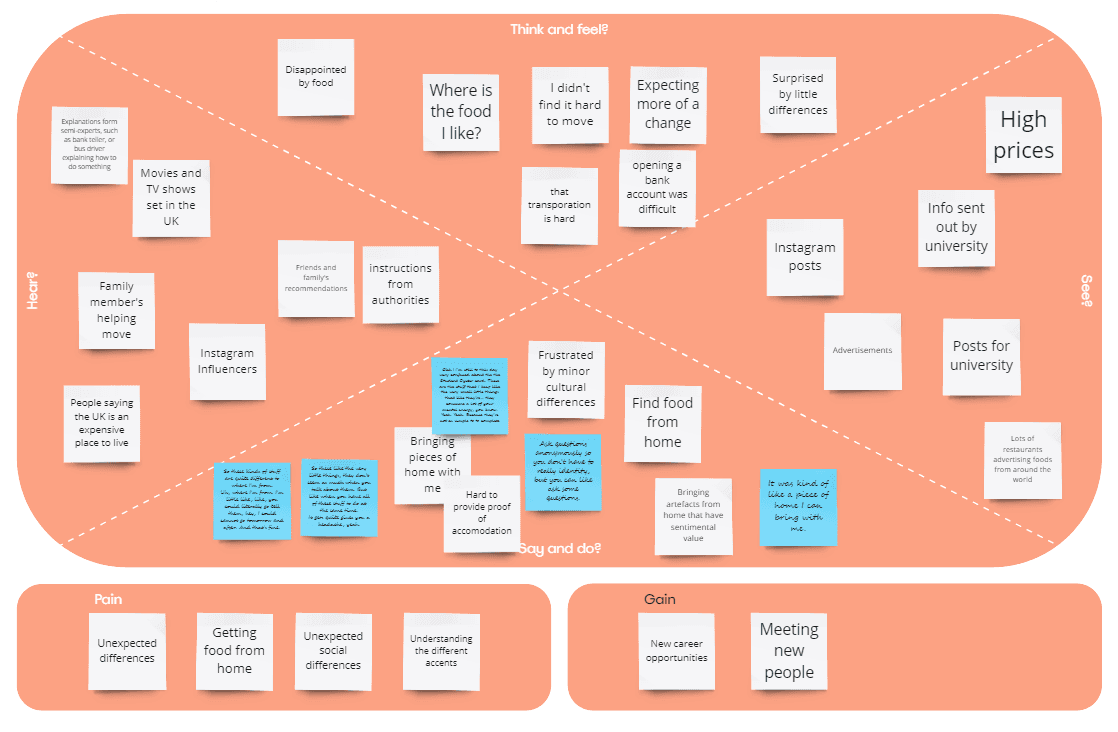
Empathy Map
Identified the differences between what people said versus did.
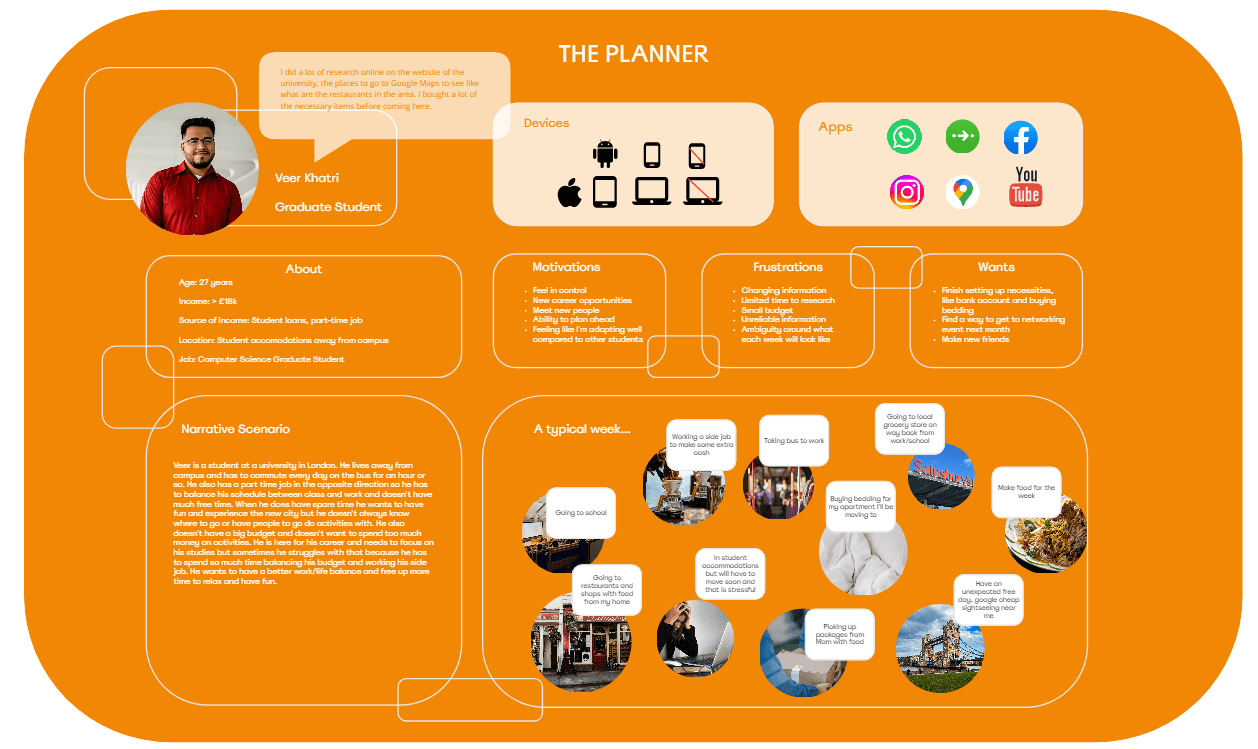
Personas
Captured and distilled the research into two personas, The Planners and The Improvisers.
Customer Journey Maps
Translated the insights from the research into a map showing the potential journey an app user would take and the key challenges and milestones they would face.
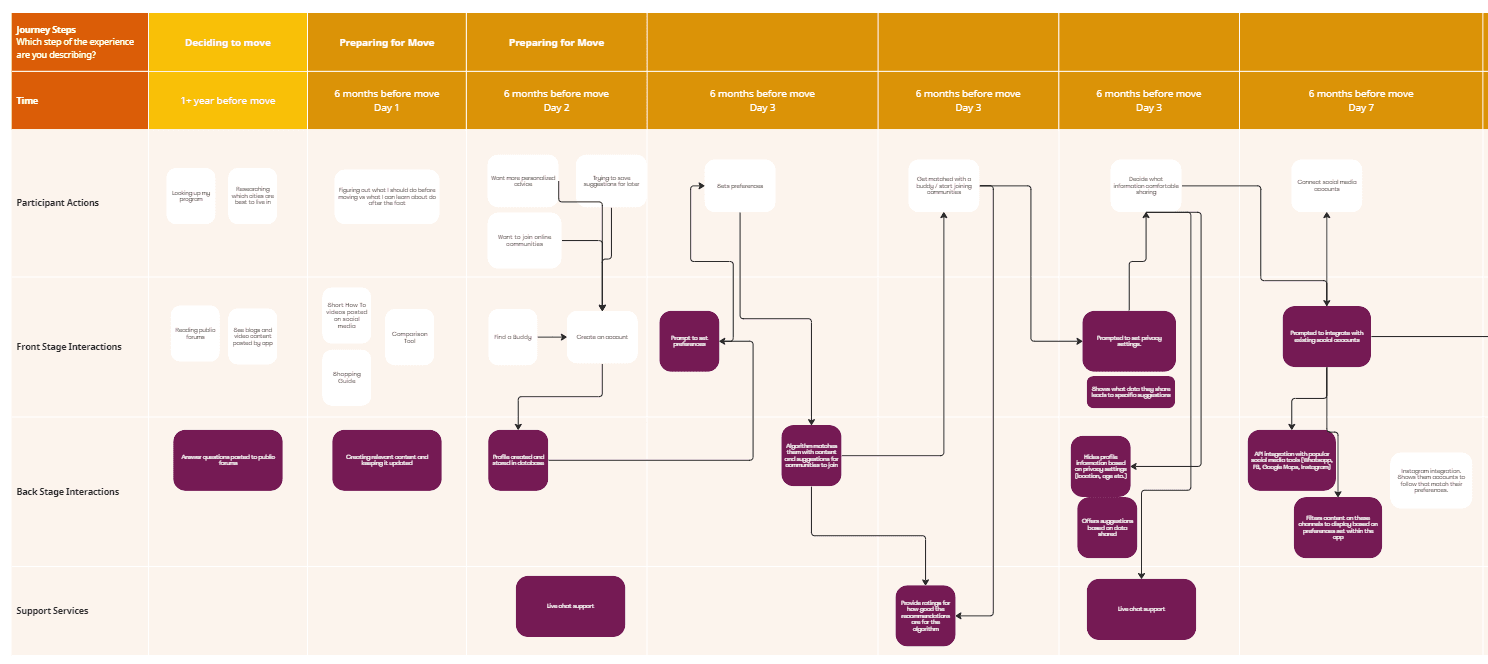
Service Blueprint
Identified the entire service journey for app users.
Ideate
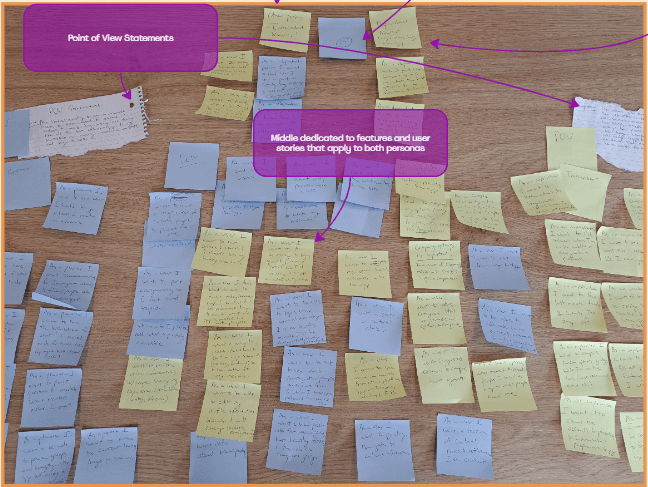
User Stories
In order to provide more concrete tasks or features that need to be addressed in the application user stories were created. The user stories were created for the two main POV statements and then prioritised.
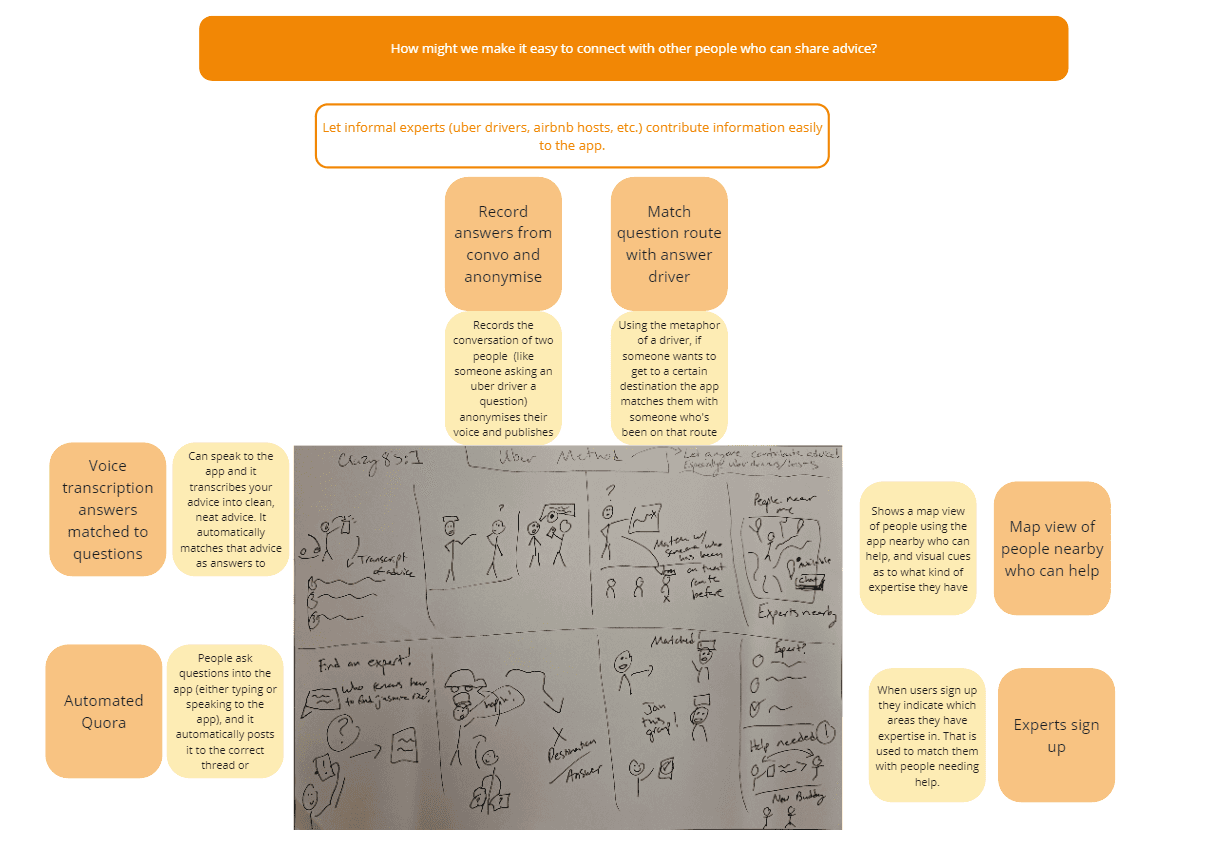
Ideation: Crazy 8s
The following ideation session used How Might We, Rapid Idea Generation, and Crazy 8s to start brainstorming ways to address the POV statements and user stories.
In order to provide more concrete tasks or features that need to be addressed in the application user stories were created. The user stories were created for the two main POV statements, however there were also several sub-personas uncovered in this process so a portion of the user stories address those new personas.
Prototype
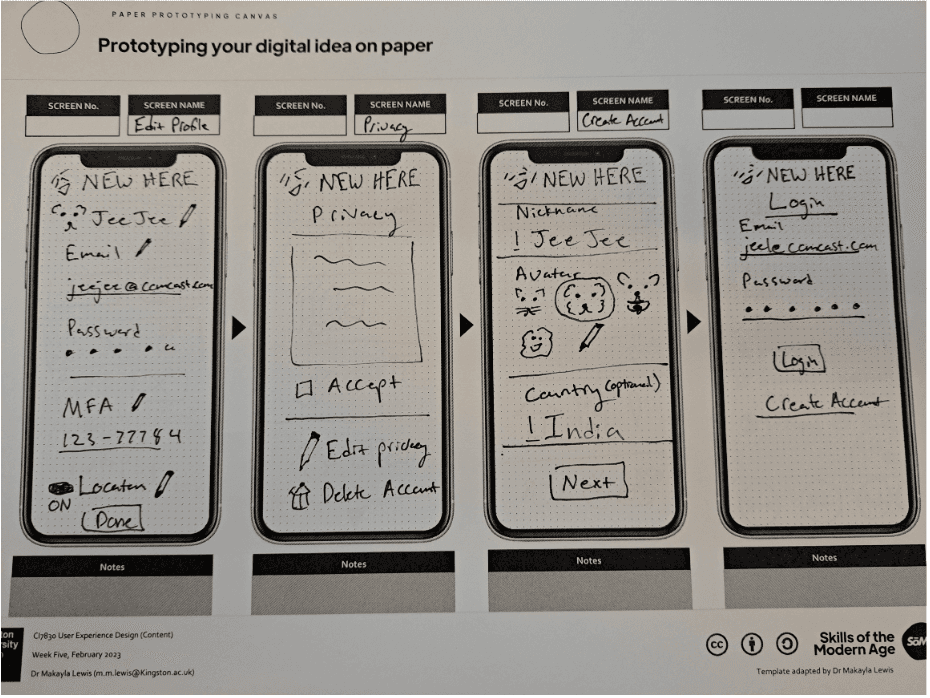
Paper Prototypes
Multiple paper prototypes were created and evaluated with users.
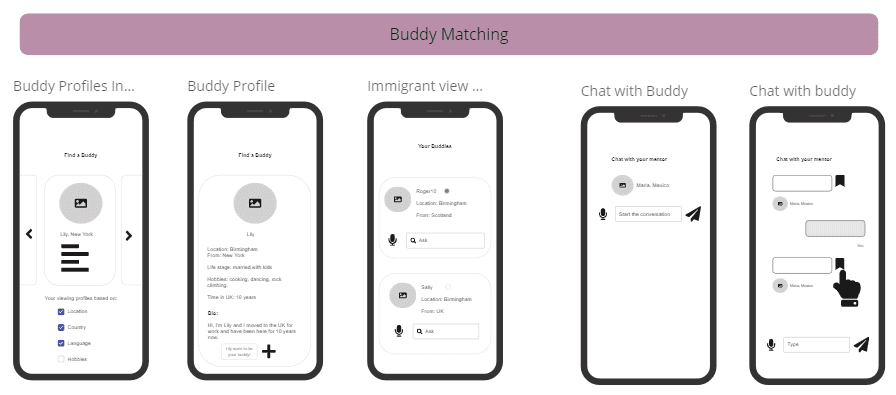
Wireframes
After the paper prototype a mid-fi wireframe was developed based on changes identified from the feedback from users on the paper prototypes.
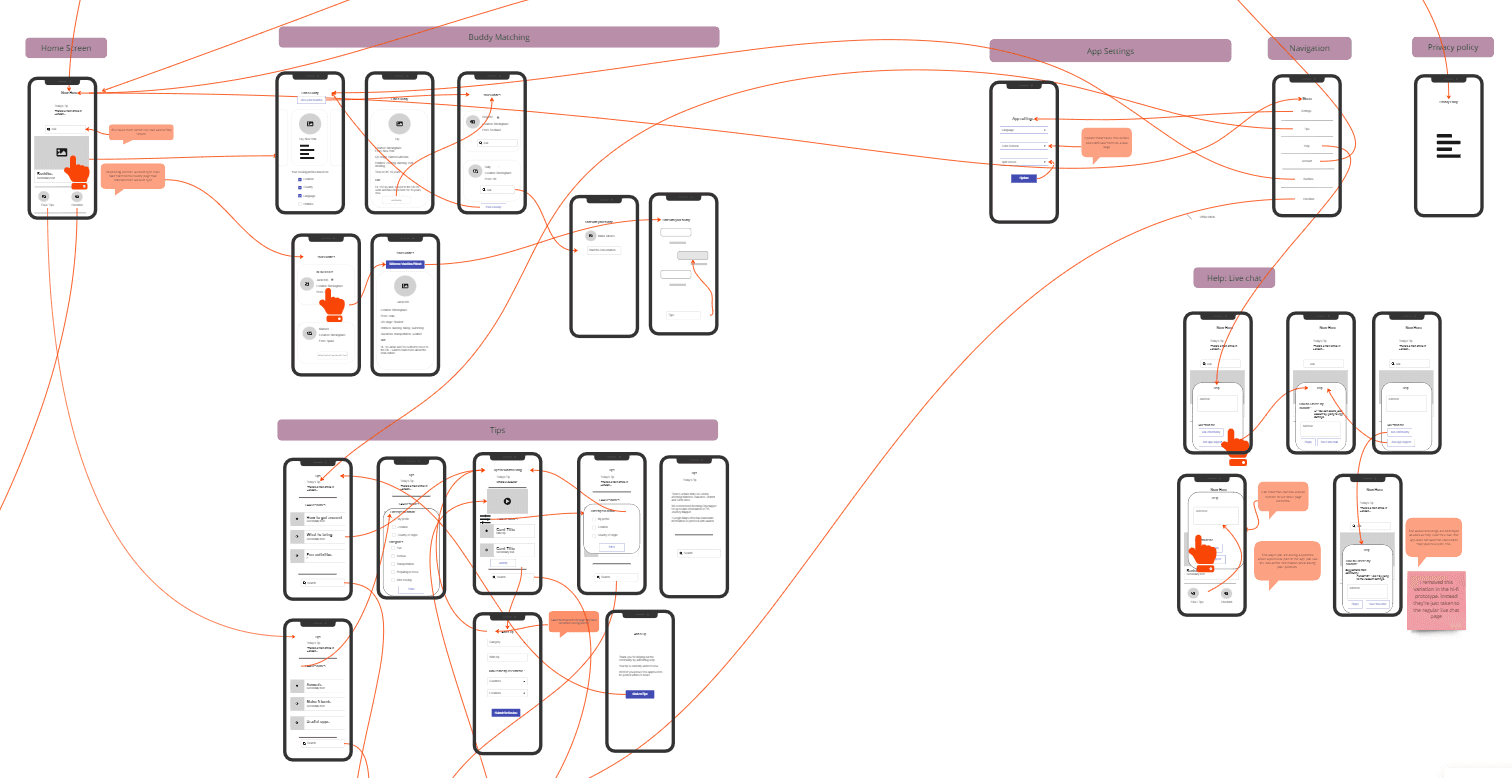
Wireflow
The following wireflow was developed after multiple rounds of evaluation with users.
Evaluation and Testing
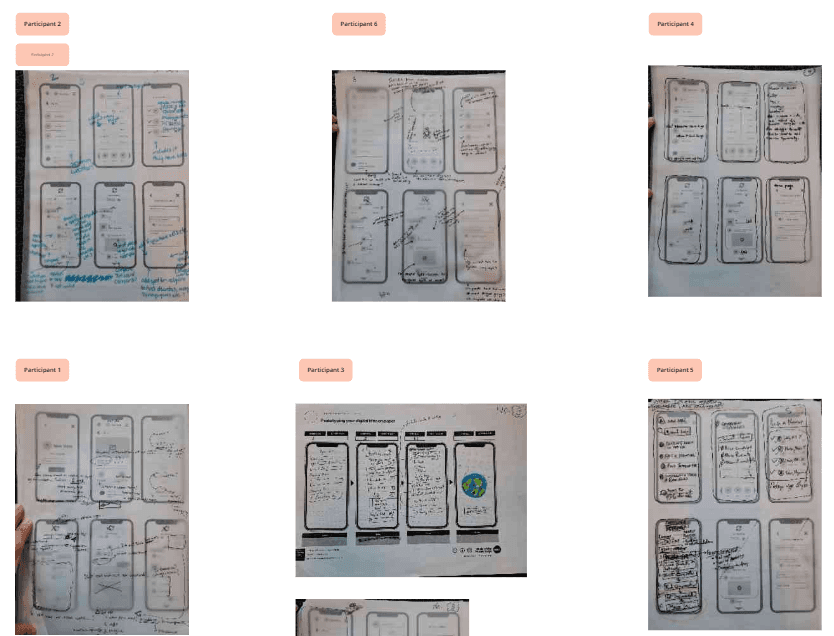
The mid-fidelity prototype was evaluated in a participatory design session with five international students. Each participant was given print out of low-fidelity versions of the app and tracing paper. They were then asked to draw on top of the app with changes they would like. Afterwards they shared in a group.
From this the key features that would be valuable to app users was identified and several features that would be nice, but were not essential to their needs were eliminated.
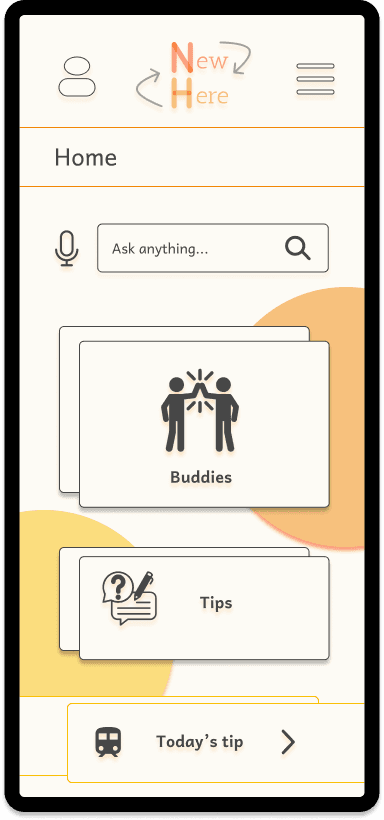
Minimal Options
Feedback during prototype evaluation was that users felt overwhelmed with having too many options.
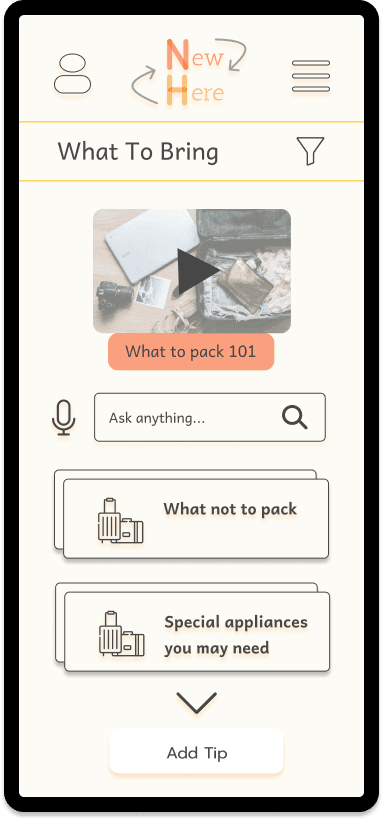
Personalised Tips
A common problem users described was not being able to filter which info was relevant to them.
Tips can be filtered to match the participant's profile.
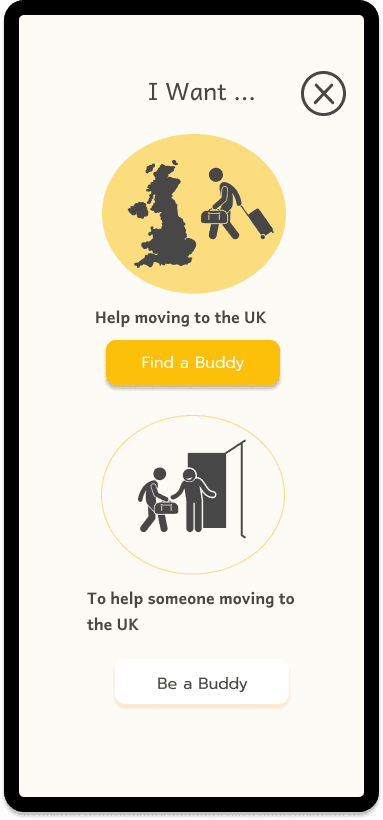
Help or Be helped
App users can sign up to get help with their move or help others moving to the UK.
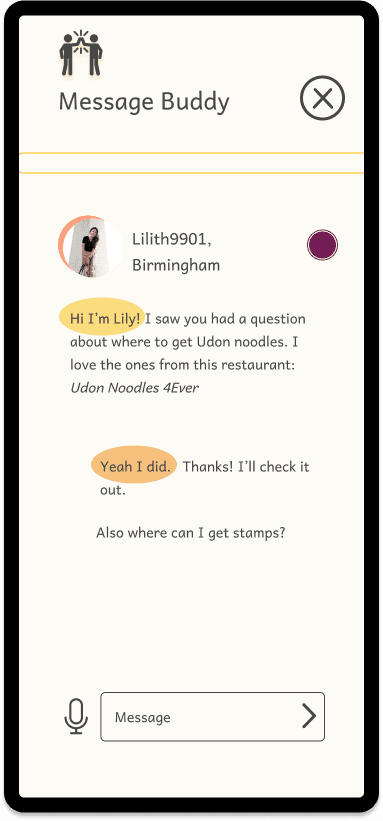
Calming Aesthetics
The app focuses on a minimal and warm aesthetic to help put app users in an optimistic mindset.
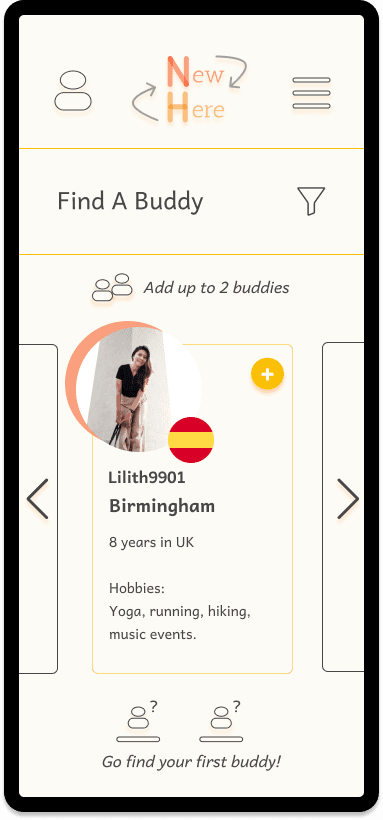
Focus on Connecting People
The biggest value users communicated was the ability to befriend locals in the UK.
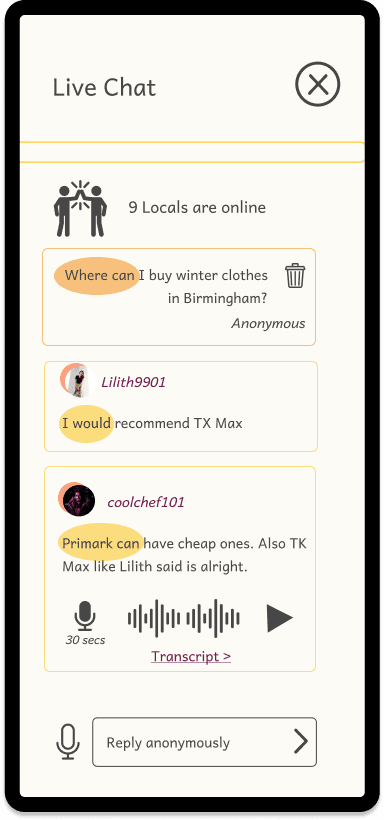
Instant Help
Users can chat with locals online to get help with smaller problems they encounter throughout their day.
Result
The final hi-fidelity prototype incorporates feedback from each round of testing on the low-fidelity versions. A Valence Test with two participants was also conducted to collect a final round of feedback before the version below was created.
At each stage users helped identify which features they truly valued and how to best communicate those features within the app.
You can preview a demo of the app here: https://www.figma.com/proto/QK9i0mxnBqtNiDBpW63TAP/Content-Design?type=design&node-id=204-1120&scaling=scale-down&page-id=0%3A1&starting-point-node-id=124%3A2
*Please note that this is a prototype, and therefore has limited functionality. It is intended to give a general sense of how the app would work.
2023
Project for Kingston University by Elisa Morrison